
Help with your app
Kugelblitz support
Learn the rules, understand your run, and get help.
Getting started
How do I play?
- Drag anywhere around the arena to aim — the ghost body shows where your drop will enter
- Let go to drop it
- Gravity pulls it toward the centre, and it settles onto the pile
- When two bodies of the same kind touch, they merge into the next one up
- Keep the pile inside the ring
There is no floor. The well at the centre of the arena pulls everything inward, so your pile grows outward in every direction at once rather than stacking upward.
How do I lose?
The faint ring near the edge of the arena is the event horizon. If any settled body's edge stays outside it for two continuous seconds, the game ends.
Brief excursions are fine — a body knocked out and bouncing back does not count. The ring brightens as the pile approaches it and turns red once something is actually running down the clock, so you get warning before it happens.
A body still falling is never counted, and the check is suspended briefly after an antimatter blast, so a deliberate shake-up cannot kill you outright.
Merging and scoring
What merges into what?
Ten bodies, each made from two of the one before it. Only the first five ever drop; everything above a moon has to be built.
 Dust drops · 0
 Pebble drops · +1
 Asteroid drops · +3
 Comet drops · +6
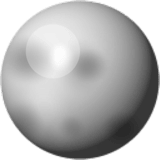 Moon drops · +10
 Rocky Planet +15
 Gas Giant +21
 Brown Dwarf +28
 Star +36
 Neutron Star +45
The neutron star is smaller than the star. That is not a bug — it is denser, so it takes up less room while weighing far more. It will sink through the pile toward the centre.
How do I make a black hole?
Merge two neutron stars. That means climbing the entire ladder twice, so most games never see one.
When it happens, a kugelblitz opens at the point of collapse and pulls the whole board into it, stretching every body out along its fall line before consuming it. You score for the event itself and again for every body it swallows. It clears the arena completely — it is both the highest score in the game and a way out of a pile that has become unmanageable.
What is the chain multiplier?
A chain is one drop's consequences. If your drop causes a merge, and that merge causes another, each link is worth more than the last — up to eight times the value of what it creates. The multiplier appears under your score from two upward, and the notes climb a scale as it runs.
It resets when you drop again. Setting up a cascade is worth far more than merging steadily.
Why do heavy bodies sink?
Because they weigh more. Everything is pulled toward the centre, so a heavy body pushes lighter ones out of the way as it settles, exactly as it would in a real pile. Drop a neutron star onto a bed of dust and it will burrow to dead centre while the dust rides up over it.
This is worth using deliberately: the heavy things you build will migrate inward on their own, which tends to leave the light ones on the surface where you can still reach them.
What is the row of circles under my score?
The progression ladder — one dot per body, sized to its real radius. A hollow ring is something you have not made yet this game; a filled one is something you have. Tap it to open the full list with names and score values.
Antimatter
What is antimatter, and what is the difference between the two charges?
They are two different tools, not one tool at two strengths. Load one and it replaces your next drop, so you choose where it lands. It detonates on first contact.
The shove matters more than the crater. Either charge scatters far more bodies than it destroys, and heavier bodies move less than light ones. A well-placed blast sets off merges you could not have reached by dropping — and those merges score normally.
Annihilated bodies score nothing, and some survivors shed a speck of dust. Charges reset when you start a new game.
Saved data and settings
Is my score saved? Does it sync between devices?
Your best score and your black hole count are saved on the device. They do not sync — there are no accounts and the game never talks to a server, so each device keeps its own record. Deleting the app deletes them.
Can I play offline?
Always. Kugelblitz has no network code at all. It works identically in airplane mode, and it will still work if this website disappears.
How do I turn off the sound or the haptics?
Both are switches on the main menu, and they take effect immediately. The game also respects your device's silent switch.
Devices
- iPhone: iOS 17 or later, portrait.
- iPad: iPadOS 17 or later, portrait.
Kugelblitz is designed for touch and portrait play. It is not offered on Mac or Apple Vision Pro.
Contact support
Email [email protected] for help, bug reports, or suggestions. For a physics issue, include your device and OS version, what was on the board, and what you expected to happen. A screen recording is especially useful for showing motion.
Expected response time: 24–48 hours.